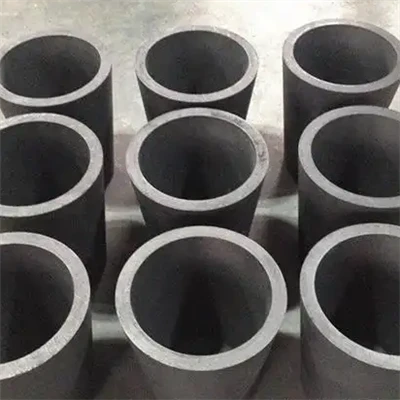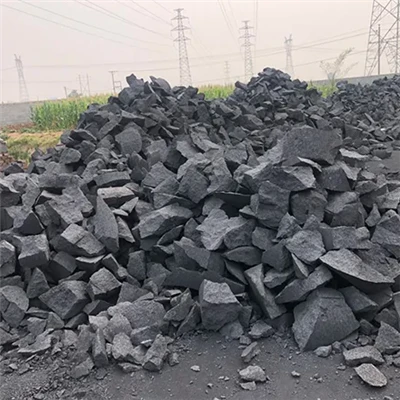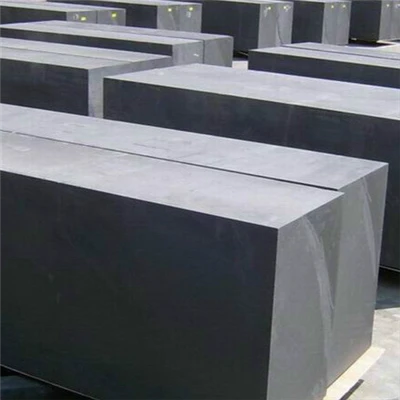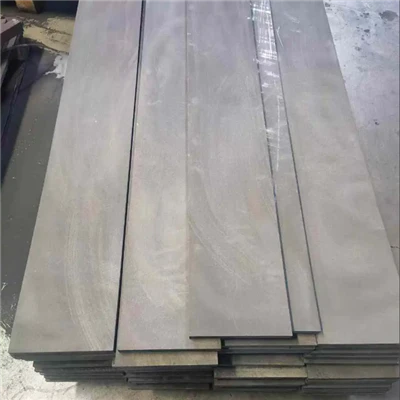


Graphite electrodes are industrial electrodes primarily composed of graphite, possessing good electrical conductivity, high-temperature resistance, and a certain level of mechanical strength. They are mainly used in electric arc furnace steelmaking, resistance furnaces, submerged arc furnaces, and some electrochemical and mechanical processing fields. Commonly used graphite electrodes in industrial production are typically made from carbonaceous raw materials such as petroleum coke and needle coke, with coal tar pitch added as a binder. The process involves kneading, molding, calcination, impregnation, and high-temperature graphitization. After a series of processing steps, the material forms a relatively stable conductive structure and meets the requirements of high-temperature and high-current operating conditions. The primary function of graphite electrodes is to conduct current. In an electric arc furnace, the electric arc generated between the electrode and the furnace charge releases a large amount of heat, melting scrap steel and other metal raw materials. Compared to some metal electrodes, graphite electrodes have advantages such as high-temperature resistance, better electrical conductivity, relatively low thermal expansion, and ease of machining, thus occupying an important position in the metallurgical industry. However, graphite electrodes can also experience oxidation consumption, end wear, and mechanical fracture under high-temperature environments. Their actual service life is closely related to the current intensity, furnace atmosphere, cooling conditions, and operating methods.
Based on permissible current density, material properties, and applicable operating conditions, graphite electrodes are generally classified into three main categories: ordinary power graphite electrodes, high-power graphite electrodes, and ultra-high-power graphite electrodes. Ordinary power graphite electrodes are mainly used in general-power electric arc furnaces for steelmaking and are suitable for conventional smelting processes. High-power graphite electrodes have better conductivity and heat load capacity, can withstand higher current densities, and are often used in electric arc furnaces with high production efficiency requirements. Ultra-high-power graphite electrodes typically use higher-performance raw materials and more stringent manufacturing processes, exhibiting lower resistivity, higher mechanical strength, and better thermal shock resistance, making them suitable for large-capacity, high-power electric arc furnaces for steelmaking. Different types of graphite electrodes differ in raw material selection, production processes, physicochemical properties, and operating conditions; therefore, the actual selection requires consideration of the furnace capacity, transformer power, current density, and production schedule.
Graphite electrodes can also be classified according to their application and structural form. For example, graphite electrodes used in electric arc furnace steelmaking are mainly used to conduct large currents and generate electric arcs, and are important consumables in the electric arc furnace steelmaking process. Graphite electrodes or related carbonaceous electrodes for submerged arc furnaces are mainly used in the smelting of ferroalloys, industrial silicon, and other products, and their working environment and structural requirements differ from those of steelmaking electrodes. Graphite electrodes for electrical discharge machining utilize pulsed discharge to remove metal materials and are mainly used for machining molds and complex workpieces, with high requirements for dimensional accuracy, machining stability, and electrode wear rate. In addition, graphite materials can also be used in some electrolytic equipment and other industrial conductive components, but products for different applications have different technical requirements in terms of purity, strength, dimensions, and electrical properties. Overall, the classification of graphite electrodes mainly depends on the power level, application scenario, and product structure. Appropriate selection of electrode type can improve production efficiency, reduce electrode consumption, and improve the stability of equipment operation.