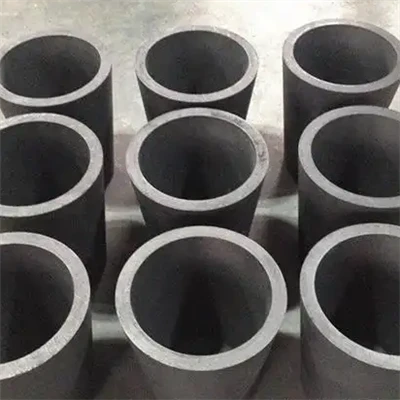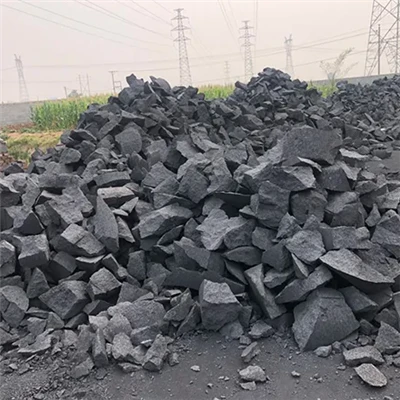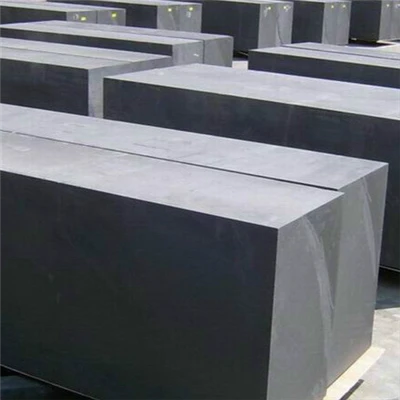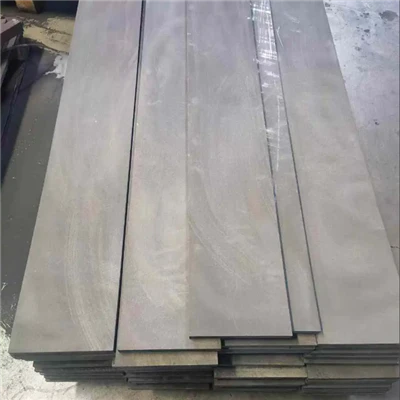


Graphite electrodes possess physical characteristics such as low density, low hardness, good electrical conductivity, and strong thermal conductivity. These properties are closely related to graphite's unique layered crystal structure. The bulk density of graphite electrodes is typically approximately 1.55–1.85 g/cm³, with the specific value depending on the raw material composition, molding method, calcination process, and degree of graphitization. Graphite's Mohs hardness is typically 1–2, making it relatively soft and easy to machine through turning, milling, and drilling. However, this also means it is susceptible to chipping or cracking during handling and installation due to impacts and pressure. Compared to many metallic materials, graphite has better thermal conductivity, which can promote heat transfer to a certain extent and reduce localized heat accumulation. Furthermore, graphite typically has a low coefficient of thermal expansion, resulting in relatively small dimensional changes with temperature variations. This characteristic helps the electrode adapt to high-temperature operating environments and reduces thermal stress caused by uneven thermal expansion.
The electrical conductivity of graphite electrodes is one of their most important physical properties, directly affecting power transmission efficiency and resistance loss during use. The resistivity of industrial graphite electrodes typically ranges from a few micro-ohms to over ten micro-ohms, with variations depending on power rating and product grade. Generally, lower resistivity indicates stronger conductivity, but actual performance needs to be assessed in conjunction with the electrode's current load, structural dimensions, and operating temperature. The conductivity of graphite is related to the arrangement of its internal carbon atoms; the presence of delocalized electrons within the crystal layers contributes to its good current conduction. Simultaneously, graphite exhibits significant anisotropy, with its conductivity and thermal conductivity varying depending on the crystal alignment. High-temperature graphitization of industrial graphite electrodes further enhances the ordered arrangement of internal carbon atoms, generally improving conductivity and thermal stability. However, impurities in the raw materials, internal porosity, and manufacturing processes can also affect the final performance.
Graphite electrodes also possess certain mechanical properties and heat resistance characteristics, primarily including flexural strength, compressive strength, elastic modulus, coefficient of thermal expansion, and thermal shock resistance. Among these, flexural strength reflects the electrode's ability to resist bending failure, while compressive strength is related to the material's ability to withstand compressive loads. These indicators affect the reliability of the electrode during clamping, connection, and use. Graphite can withstand high temperatures and exhibits good thermal stability in environments lacking oxygen or with low oxygen content. However, it is prone to oxidation in high-temperature, oxygen-containing environments, leading to increased material consumption. Therefore, the actual performance of graphite electrodes depends not only on their inherent physical properties but also on the furnace atmosphere, operating temperature, current density, and cooling conditions. In industrial production, a comprehensive evaluation combining indicators such as bulk density, resistivity, flexural strength, coefficient of thermal expansion, and ash content is usually required to determine whether the graphite electrode meets the specific equipment and process requirements.