

Graphite possesses several unique technical properties, most notably its excellent electrical and thermal conductivity, high-temperature resistance, and lubrication. These properties are primarily related to graphite's layered crystal structure and the bonding mechanism of its carbon atoms. Within graphite, carbon atoms within the same carbon atom layer are connected by strong covalent bonds, forming a stable hexagonal network structure, while the bonding force between adjacent carbon atom layers is relatively weak. This structure allows graphite to maintain a certain degree of structural stability while exhibiting good interlayer sliding ability, thus providing lubrication during mechanical friction. Simultaneously, the presence of delocalized electrons within graphite's carbon atom layers contributes to its excellent electrical conductivity. Furthermore, graphite also exhibits relatively high thermal conductivity, although its electrical and thermal conductivity are affected by crystal orientation, material purity, density, and processing techniques, displaying significant anisotropy. In industrial applications, these technical properties make graphite suitable for manufacturing electrodes, conductive components, heat dissipation materials, and solid lubricants.
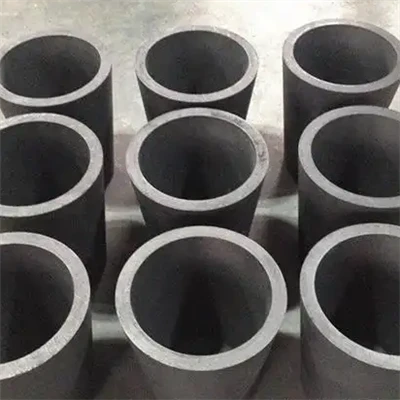
Graphite also possesses good high-temperature resistance, chemical stability, and certain machinability. Graphite can withstand high temperatures in vacuum or inert gas protected environments, and is therefore commonly used in high-temperature furnaces, metallurgical equipment, graphite crucibles, and some refractory components. However, graphite oxidizes when heated in air, and the oxidation reaction usually accelerates with increasing temperature; therefore, its actual operating temperature needs to be determined in conjunction with the working atmosphere and equipment conditions. In terms of chemical properties, graphite has a certain tolerance to many acids, alkalis, and organic media, and can be used to manufacture some chemical equipment and sealing components, but it may react in strong oxidizing media. Furthermore, graphite has a low coefficient of friction, but its mechanical strength, impact resistance, and wear resistance vary depending on the raw materials, porosity, and manufacturing process. After impregnation, pressing, or other modification treatments, the density, strength, and resistance to media in graphite products can be further improved. Overall, the technical advantages of graphite are mainly reflected in its electrical and thermal conductivity, high-temperature resistance, lubrication, and chemical stability, while its actual performance needs to be comprehensively evaluated based on the material type, processing quality, and specific operating conditions.