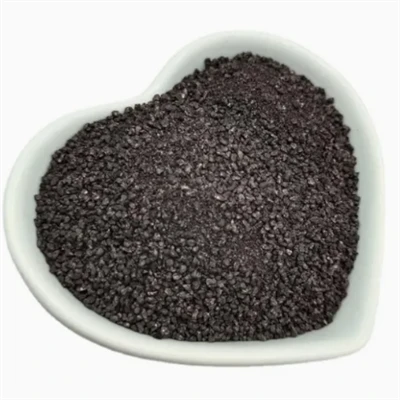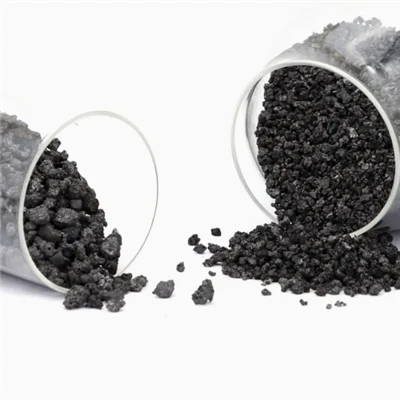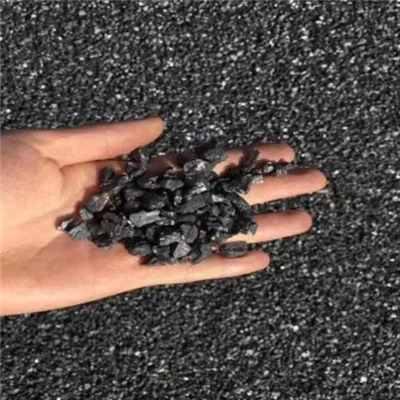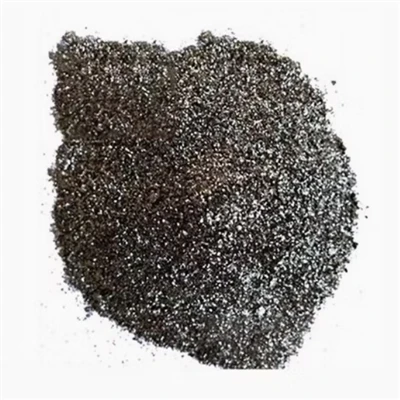



Hebei Fengchao Import and Export Co., Ltd. is one of the most reliable manufacturers and suppliers of natural graphite carburizer 1-3mm in China. With a professional production team, we are able to meet the needs of the majority of our customers. If you're going to wholesale bulk natural graphite carburizer 1-3mm made in China, welcome to get pricelist from our factory.
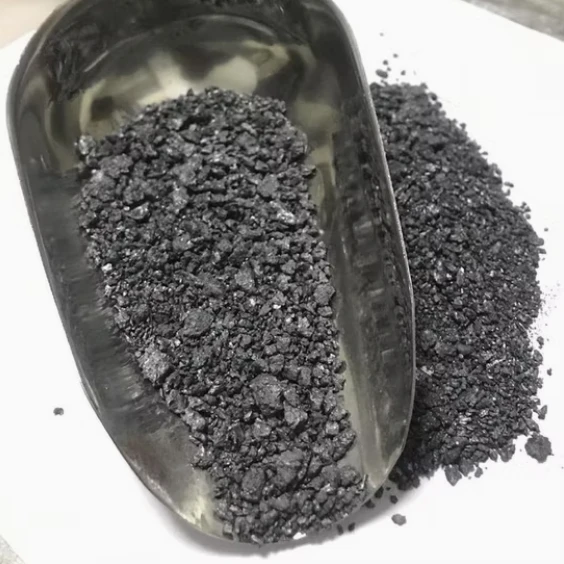
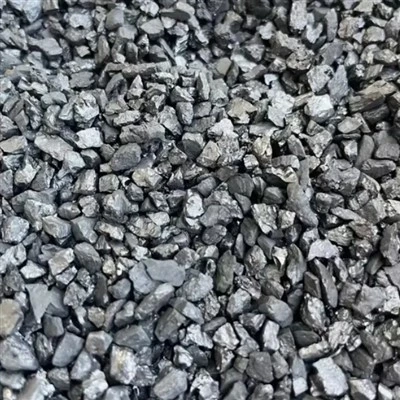
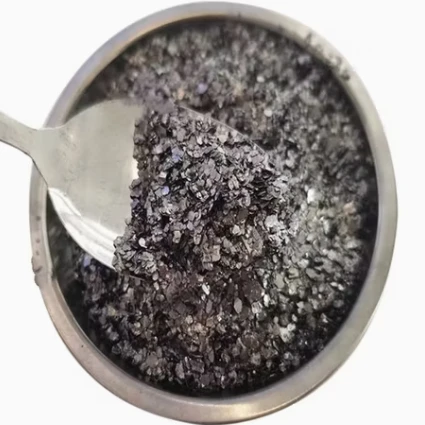
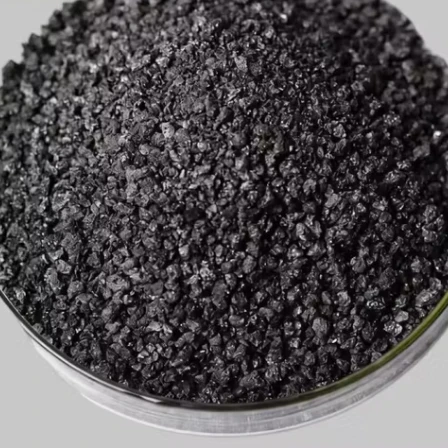
The 1-3mm natural graphite carburizer is manufactured by roller compaction granulation of purified high-purity natural flake graphite. Compared with fine graphite powder, the compacted particles greatly reduce dust generation during feeding. Retaining native flake graphite crystals, the product provides high-quality nucleation substrates for graphite growth in cast iron. It features moderate settling performance and steady carbon release, suitable for mixing with cold furnace burdens for melting in medium-frequency furnaces. It lowers oxidative burn loss and mitigates fluctuations in carbon yield, helping foundries achieve stable mass casting production while controlling costs.
The 1-3mm natural graphite carburizer is produced by roller compaction granulation of purified natural flake graphite powder. The compacted granular form remedies the severe dusting drawback of fine natural graphite powder. Despite granulation treatment, native flake microcrystals remain inside the particles. Unlike large synthetic graphite lumps with relatively slow dissolution rates, these particles dissolve moderately in molten iron and can be evenly blended with cold scrap steel and furnace charges for primary carbon addition in the early stage of medium-frequency furnace melting. During smelting, particles gradually disintegrate and release flake graphite fragments to act as nucleating agents, promoting uniform graphite precipitation in grey iron and ductile iron. This grade serves as a cost-effective alternative material, helping foundries reduce carbon yield fluctuations and sustain consistent casting output.
This product is made of flotation-purified natural flake graphite powder, processed via roller compaction, granulation, screening and curing to form dense 1-3mm particles. Granulation significantly suppresses dust during feeding. Native flake microcrystals are retained inside the particles; upon disintegration, they deliver graphite nucleation benefits in molten iron and improve the fundamental metallographic conditions of cast iron. The production technical team controls powder purification and roller compaction processes to steadily manage fixed carbon, ash and moisture indicators. An independent storage zone for granulated natural graphite is established, separated from synthetic graphite granules to prevent cross-contamination of different carbon materials. It mainly serves medium-frequency furnace casting production of grey iron and ductile iron. In addition to routine physicochemical testing, particle crushing strength and particle size screening tests are performed. Samples are retained for each batch, and third-party sampling and testing are available for export orders. Suitable for blending into cold furnace burdens for early primary carbon addition, it reduces powder burn loss and helps foundries balance casting quality and raw material input costs in large-scale production.
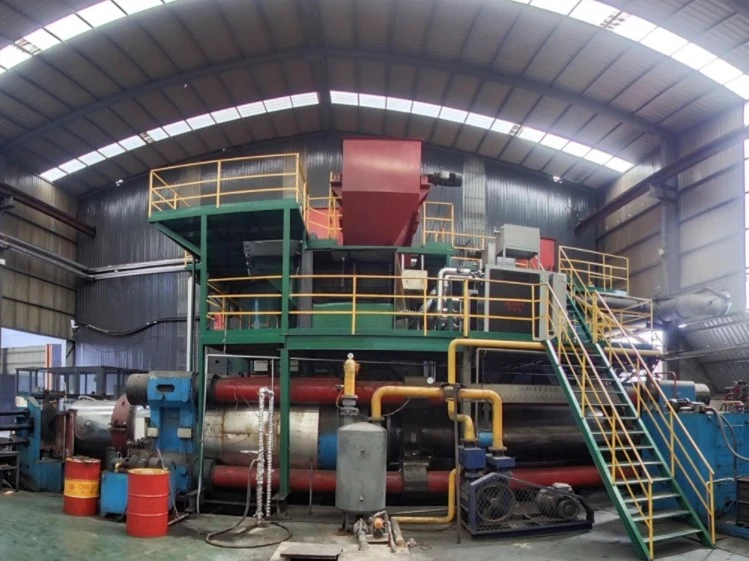
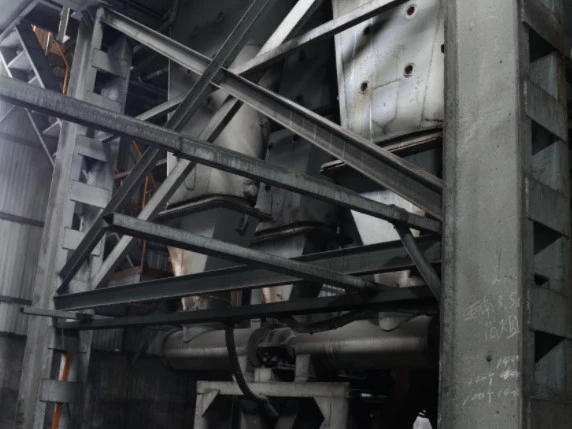
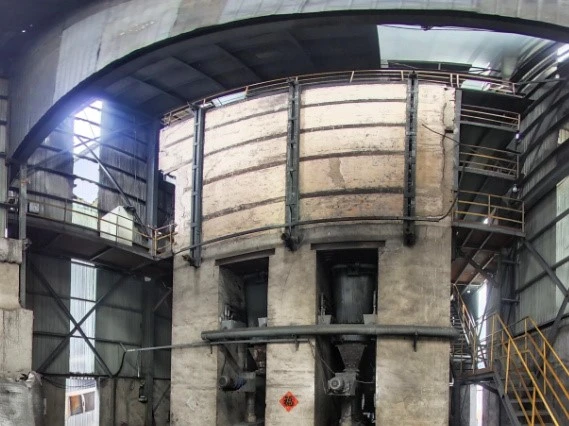
Factory Tour
FAQ
Q: What are the main differences between 1-3mm roller-compacted granulated natural graphite carburizer and fine natural graphite powder for on-site casting applications?
A: Fine powder generates heavy dust during feeding and suffers high burn loss under hot gas flow. The formed 1-3mm compacted granulated material produces markedly less flying powder when feeding and can be mixed directly into cold scrap steel for early primary carbon addition. After entering high-temperature molten iron, particles gradually disintegrate and release internal flake microcrystals to retain nucleation advantages. However, granulation is merely physical compaction and does not alter the inherent mineral properties. Associated silicate impurities still exist, and its ash content is generally higher than synthetic graphite granules of the same grade.
Q: Why is particle crushing strength a critical indicator for this granulated carburizer?
A: If the strength is too low, particles tend to break during transportation, loading, unloading and feeding, reverting back to large quantities of fine powder and reintroducing dust problems. If the strength is excessively high, particles struggle to disintegrate after entering molten iron, floating intact on the molten iron surface and drastically slowing dissolution, which leads to delayed local carbon readings. The appropriate strength standard is: particles remain intact during storage and transportation, yet gradually crack under heat upon contact with high-temperature molten iron to release flake graphite, balancing handling and smelting performance. Clear technical requirements for particle crushing strength can be specified when placing orders.
Q: When using 1-3mm granulated natural graphite carburizer for early primary carbon addition in medium-frequency furnaces, what conditions will cause reduced carbon yield?
A: First, particles laid in furnace charges are directly exposed to the high-temperature arc zone and heated before being covered by scrap steel, resulting in premature burning and loss of surface particles. Second, slag forms too quickly in the early melting stage, and some undisrupted particles become encapsulated and isolated by viscous slag, unable to contact molten iron. Third, excessively rapid heating of molten iron aggravates graphite oxidation. A reasonable burn loss coefficient must still be reserved for burden calculation. It is preferable to bury the material beneath scrap steel to reduce direct burning risks.
Q: When purchasing this granulated natural graphite carburizer, besides fixed carbon, which impurity items require focused attention?
A: Ash content and silica content are the top priorities. Excess silica promotes slag formation and accelerates furnace lining erosion. Trace elements such as titanium and vanadium must also be strictly controlled. Excessive titanium in ductile iron production interferes with nodulizing reactions and easily forms irregular graphite. Moisture control is also essential. Damp particles tend to soften and turn into powder, clogging silos during feeding and creating safety hazards of molten iron splashing after charging into the furnace.
Q: What casting conditions are more suitable for the 1-3mm granulated natural graphite carburizer, and under what scenarios should synthetic graphite granules be prioritized?
A: Mass production of standard grey iron and conventional-grade ductile iron, with the goal of reducing workshop dust and controlling raw material procurement costs, suits the 1-3mm granulated natural graphite carburizer for early primary carbon addition. For heavy-section high-end ductile iron castings, castings with strict inclusion control, or castings with rigid upper limits for sulfur and nitrogen indicators, low-impurity synthetic graphite granules are recommended. Some foundries adopt a combined scheme: this natural granulated material for primary carbon addition at the early stage, plus small supplementary carbon trimming in the later smelting phase, balancing metallographic quality, dust control and procurement costs.
Hot Tags: natural graphite carburizer 1-3mm, China natural graphite carburizer 1-3mm manufacturers, suppliers, factory