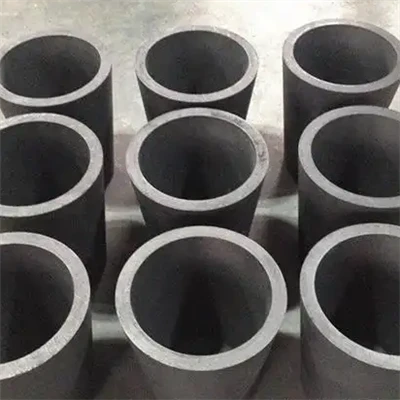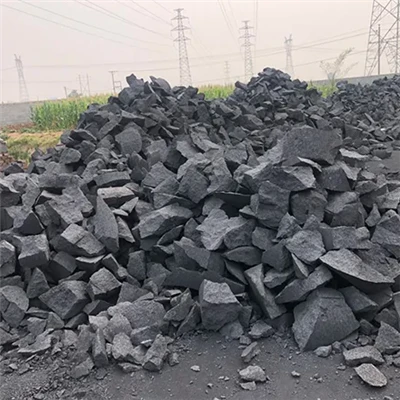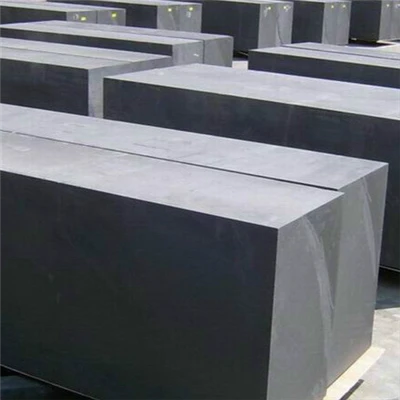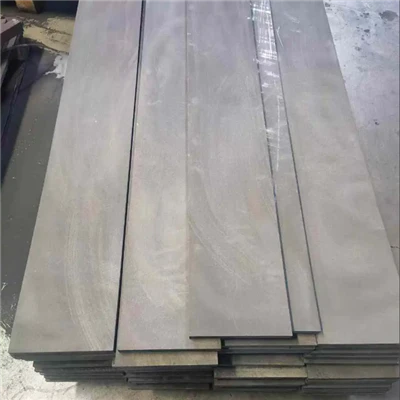

Graphite electrodes possess excellent electrical conductivity, high-temperature resistance, and thermal stability, making them a commonly used electrode material in the metallurgical industry and various industrial processing fields. Compared to many metallic materials, graphite maintains better structural stability under high-temperature conditions and has a low coefficient of thermal expansion, reducing stress caused by uneven thermal expansion in environments with rapid temperature changes. Graphite electrodes exhibit good electrical conductivity, capable of carrying large currents, meeting the requirements of high-power production processes such as electric arc furnace steelmaking. Simultaneously, graphite has good thermal conductivity, facilitating heat transfer and temperature distribution regulation. Furthermore, graphite has a relatively low density, typically lighter than many metallic materials of the same volume, facilitating processing, transportation, and installation. These characteristics make graphite electrodes highly valuable in high-temperature, high-current, and continuous-operation industrial environments.
Another advantage of graphite electrodes is their good machinability, allowing them to be manufactured in various sizes and shapes to meet the requirements of different equipment and production processes. Graphite materials can be machined using methods such as turning, milling, and drilling to create the desired structures, making them suitable for both large metallurgical electrodes and EDM electrodes requiring high dimensional accuracy. In electrical discharge machining (EDM), graphite electrodes offer advantages such as light weight and high processing efficiency, making them particularly advantageous in mold manufacturing and complex cavity machining applications. Graphite also possesses chemical stability, maintaining good performance in many non-oxidizing environments and resisting significant corrosion like some metallic materials. However, graphite is prone to oxidation in high-temperature, oxygen-containing environments, and its corrosion resistance is affected by the composition of the medium and temperature. Therefore, in practical applications, it is necessary to select the appropriate graphite grade and protective measures based on the working environment.
The advantages of graphite electrodes also lie in the comprehensive balance between material performance and production costs. Graphite electrodes can withstand high operating temperatures and large current loads, playing a crucial role in electric arc furnace steelmaking, ferroalloy smelting, and other high-temperature industrial processes. By rationally selecting raw materials and optimizing the roasting and graphitization processes, the electrode's bulk density, mechanical strength, and conductivity can be improved, thereby reducing wear during use and enhancing equipment stability. Furthermore, the performance of graphite electrodes can be adjusted according to different application requirements. For example, electrodes for steelmaking emphasize conductivity and thermal shock resistance, while EDM electrodes prioritize machining accuracy and electrode wear rate. It is important to note that while graphite electrodes offer numerous advantages, their mechanical strength is generally lower than that of many metallic materials, and they are susceptible to breakage during handling due to impacts. Therefore, in practical applications, appropriate selection should be made based on factors such as operating temperature, current load, mechanical load, and the usage environment to fully realize the performance advantages of graphite electrodes.