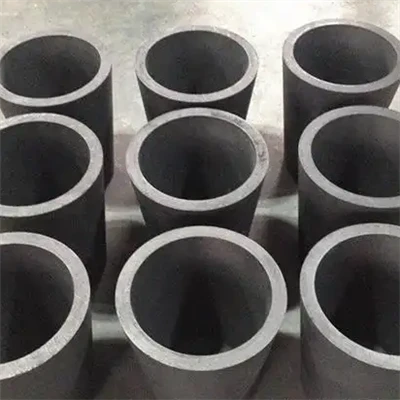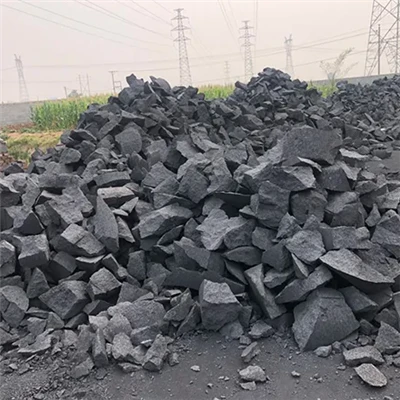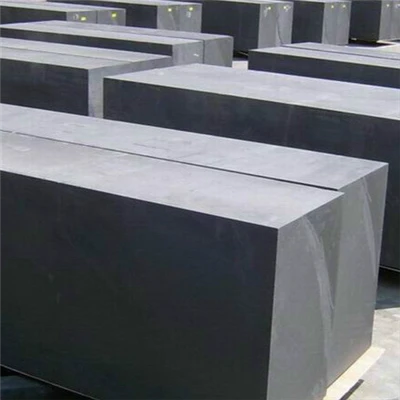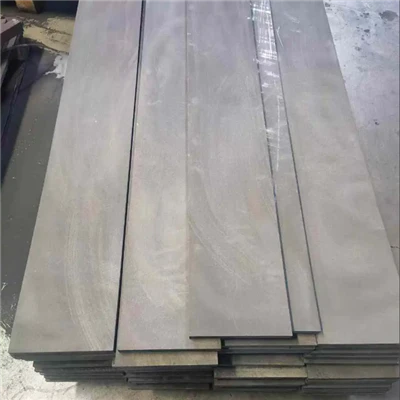


The design principle of graphite electrodes is mainly based on the requirements of current transmission, heat generation, mechanical load-bearing, and high-temperature working environment. This involves rationally determining the electrode's material composition, structural dimensions, and performance parameters to meet the needs of industrial production. Taking graphite electrodes used in electric arc furnace steelmaking as an example, the electrode needs to transmit a large current into the furnace and generate high temperatures through the electric arc to melt scrap steel and other metal raw materials. Therefore, during the design process, factors such as electrode resistivity, current density, diameter, length, and allowable temperature resistance must be carefully considered. The electrode diameter is usually selected based on the rated current and operating power of the electric furnace to avoid excessive heat generation due to excessive current density, which could lead to accelerated electrode oxidation or breakage. Meanwhile, graphite materials have good electrical conductivity, high-temperature resistance, and low thermal expansion characteristics, enabling them to adapt to the large temperature variations within electric arc furnaces, thus making them an important material for industrial electrodes.
The structural design of graphite electrodes also needs to fully consider the material's mechanical strength and thermal stability. During use, the electrode not only bears its own weight but may also be subjected to pressure from clamping devices, loads on connection points, and thermal stress generated under high-temperature conditions. If the electrode's structural dimensions are poorly designed, or if the material contains numerous pores and defects, cracking, chipping, or even breakage may occur during use. Therefore, during the design phase, it is necessary to determine a reasonable structural proportion based on the electrode's diameter and length, and to control indicators such as bending strength, bulk density, coefficient of thermal expansion, and internal uniformity. For graphite electrodes using threaded joints, it is also necessary to rationally design the joint dimensions, thread structure, and connection accuracy to ensure a secure electrode connection and reduce contact resistance and localized stress concentration. Meanwhile, graphite electrodes exhibit significant anisotropy; their electrical and thermal conductivity may differ in different directions. Therefore, the selection of raw materials, particle arrangement, and manufacturing process will also affect the performance of the final product.
Graphite electrodes typically require specific technical parameters determined based on the application scenario and continuously optimized through calculations, experiments, and actual operation. For electrodes used in electric arc furnace steelmaking, key considerations should include rated current, allowable current density, resistivity, thermal shock resistance, and electrode consumption rate. For graphite electrodes used in electrical discharge machining (EDM), greater emphasis is placed on dimensional accuracy, machining performance, electrode wear, and surface quality. Designers also need to consider the electrode manufacturing process, including raw material ratios, molding pressure, calcination temperature, and graphitization conditions, as these factors affect the material's density, mechanical strength, and electrical conductivity. After design completion, the electrode should be verified to meet usage requirements through dimensional inspection, resistivity testing, mechanical strength testing, and necessary high-temperature performance testing. Overall, graphite electrode design is not simply about determining dimensions; it requires combining electrical, thermal, and mechanical properties with manufacturing processes to improve conductivity and lifespan while ensuring safety and reliability.