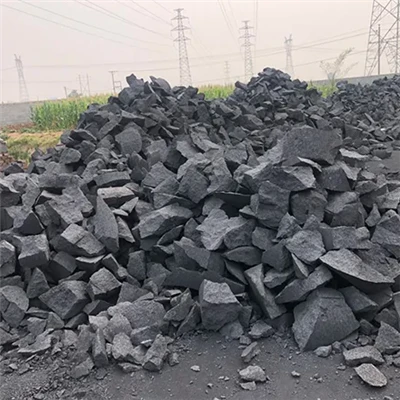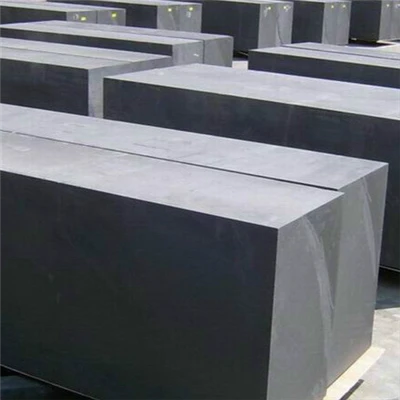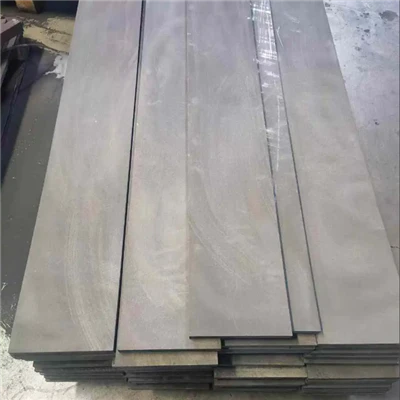


Graphite is a natural mineral composed primarily of carbon, belonging to the allotropes of carbon. The carbon atoms in graphite are arranged according to a specific pattern, forming a layered crystal structure, a key characteristic that distinguishes graphite from other carbon materials such as diamond. Microscopically, each carbon atom is covalently bonded to three surrounding carbon atoms, forming a hexagonal network of six carbon atoms. These hexagons interconnect, creating continuous planar layers of carbon atoms. Due to the highly ordered arrangement of carbon atoms, graphite possesses a relatively stable crystal structure and exhibits good electrical and thermal conductivity, as well as a certain degree of chemical stability. These properties are closely related to the arrangement of carbon atoms within graphite and the characteristics of their chemical bonds.
The most prominent feature of graphite's structure is that it consists of many stacked layers of carbon atoms. Within each layer, the covalent bonds between carbon atoms are strong, forming a stable hexagonal network; while adjacent carbon atom layers are mainly held together by weaker van der Waals forces, making relative sliding between layers relatively easy. This unique layered structure gives graphite excellent lubrication properties. When graphite is subjected to friction or external force, some carbon atom layers can slide along the interlayer direction, thereby reducing the frictional resistance of the contact surface. Furthermore, the interlayer spacing of graphite is approximately 0.335 nanometers, while the distance between carbon atoms within a layer is approximately 0.142 nanometers, indicating a significant difference in bonding between intralayer and interlayer surfaces. It is precisely because of this structural difference that graphite exhibits a relatively soft and easily peelable characteristic, leading to its widespread application in lubricating materials, pencil leads, and some industrial sealing materials.
Graphite also possesses a unique electronic structure, which is a crucial reason for its electrical conductivity. In each layer of graphite, each carbon atom, in addition to forming covalent bonds with three adjacent carbon atoms, also has an electron participating in the formation of a delocalized π-electron system. These electrons can move within a certain range within the carbon atom layer, giving graphite good electrical conductivity. Because the activity of electrons is mainly concentrated within the layers, the electrical and thermal conductivity of graphite varies significantly in different directions; this phenomenon is called anisotropy. Meanwhile, graphite's layered structure, high heat resistance, and good chemical stability enable its applications in electrode materials, refractory materials, metallurgy, and new energy fields. For example, in lithium-ion batteries, graphite can serve as the negative electrode material, allowing lithium ions to enter and exit the graphite layers during charging and discharging. Therefore, the structural composition of graphite not only determines its basic physical and chemical properties but also directly influences its application value in modern industry and energy technology.