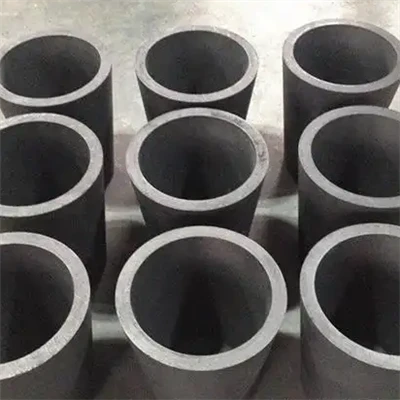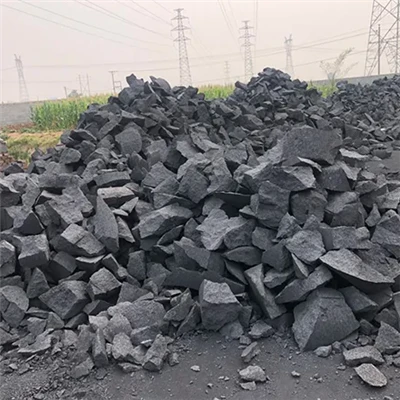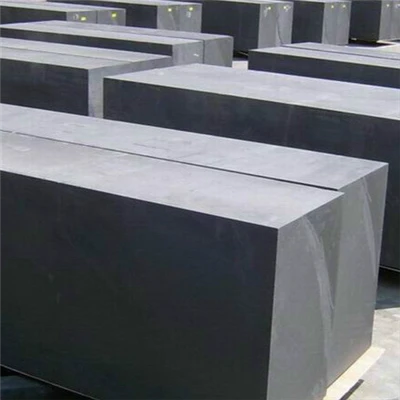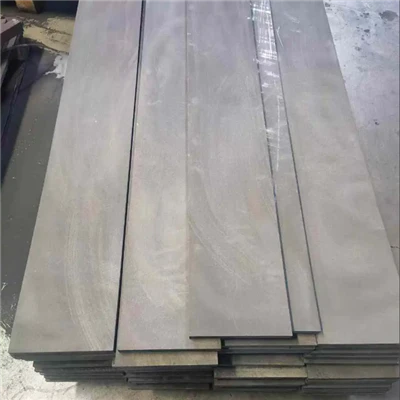


Graphite is a non-metallic mineral primarily composed of carbon, possessing unique physical and chemical properties. Its physicochemical characteristics are closely related to its internal layered crystal structure. Physically, graphite is typically grayish-black or steel-gray, with a metallic or earthy luster. It is relatively soft with low hardness, generally ranging from 1 to 2 on the Mohs scale. Graphite's density is typically approximately 2.09–2.23 g/cm³. It exhibits good electrical and thermal conductivity, along with a low coefficient of friction and good lubrication. This is mainly because the carbon atoms within graphite are interconnected by strong covalent bonds within the same layer, while the bonding forces between adjacent layers are relatively weak, allowing the carbon atom layers to easily slide under external forces. Furthermore, graphite exhibits significant anisotropy; its electrical, thermal, and mechanical properties vary depending on the orientation of its crystal structure. Graphite also possesses good high-temperature resistance, capable of withstanding high temperatures under oxygen-deficient or inert gas protection conditions. Therefore, it is frequently used in refractory materials, high-temperature crucibles, electrodes, and industrial lubricants.
In terms of chemical properties, graphite exhibits good chemical stability, does not readily react with most substances at room temperature, and can withstand the effects of various acids, alkalis, and organic solvents. However, its specific corrosion resistance is affected by impurity content, temperature, and media conditions. When heated in air, graphite gradually oxidizes with oxygen to produce carbon dioxide; when oxygen supply is insufficient, carbon monoxide may also be produced. The oxidation rate of graphite typically increases significantly with rising temperature, therefore, oxygen content control or protective measures are often necessary during high-temperature applications. Graphite can also react with strong oxidants under certain conditions and can form graphite intercalation compounds with some substances, demonstrating the chemical reaction characteristics resulting from its unique layered structure. Compared to diamond, although graphite is also composed of carbon, the arrangement and bonding of carbon atoms differ, leading to significant differences in hardness, electrical conductivity, and chemical reaction behavior. Graphite possesses good electrical conductivity, heat resistance, lubricity, and a certain degree of chemical stability, thus holding significant application value in metallurgy, machinery manufacturing, batteries, electrochemistry, and novel carbon materials.